| Peter ten Hoopen | P E T E R T E N H O O P E N music archivist | |
 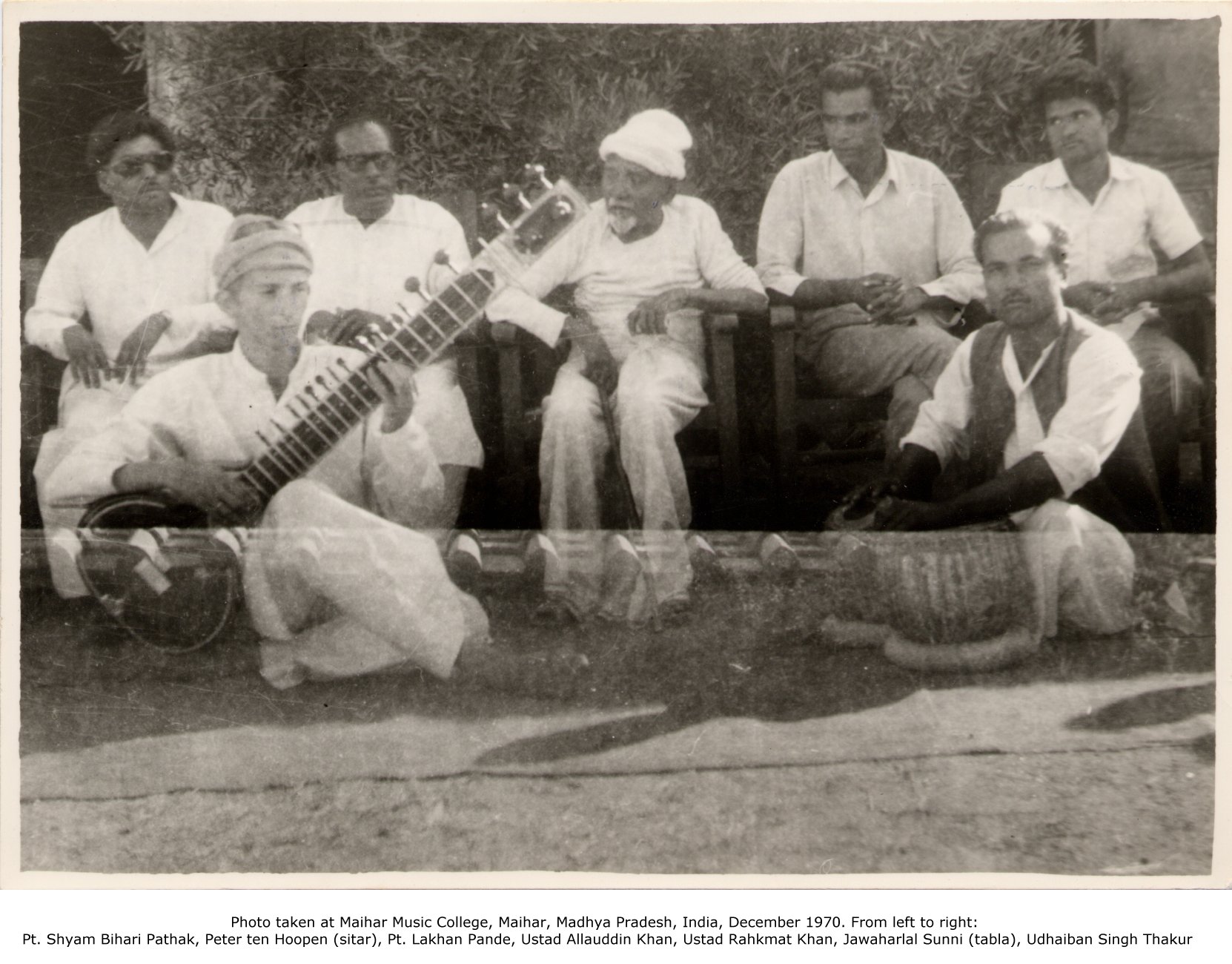
Performing for Ustad 'Baba' Allauddin Khan and friends in Maihar, Madhya Pradesh, India, December 1970, on the grounds of the Maihar Music College that Baba founded. From left to right: Shyam Bihari Pathak, Peter ten Hoopen (sitar), Lakhan Pande, Ustad Allauddin Khan, Ustad Rahkmat Khan, Jawaharlal Sunni (tabla), Udhaiban Singh Thakur. Baba, the father of Ali Akbar Khan and father-in-law of Ravi Shankar, was a modest, unassuming man of humble Bengali origins, who had to grovel and slave for years to be taught by a great master, but he achieved his wish and became a great ustad, revered as a saint by many. Two important things I learned from Baba, one practical, the second spiritual. The first is one-pointedness. Do what you are passionate about and do that exclusively, with total dedication, consciously cutting out every distraction. It results in fast progress. But the second teaching was even more valuable. One day he came by in a risksha and made me play for him. Afterwards I admitted that I was disappointed about how I had performed before him. Raising his feared bamboo stick Baba shouted at me: "You are doing very wrong! Never expect any results! Practice is its own reward! Shaped my life. 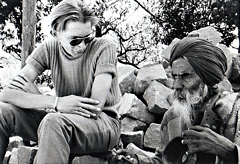 Listening intently to dilrouba player in Himachal Pradesh, India, 1969. Photo Ewald Vanvugt. |
Born in the Netherlands. Studied psychology at Amsterdam University while working as a journalist and translator. In 1968, inspired by a deepening love for Asian music, began a three year journey through the Middle East and the Indian subcontinent, collecting material for Across the Bedrock of Islam, another work of non-fiction, and feature articles, photographing for Syndication International, studying sitar at the feet of Ravi Shankar's father in law, the violent saint Ustad Allauddin Khan, India's most revered musician of all time, and recording traditional Afghani music for the legendary Folkways Records (now a department of the Smithsonian) and the Elektra Nonesuch series. Both are represented in musicological collections world-wide, from Berkeley, Yale, Wesleyan, and Stanford, to Haifa and Osaka University. The 18 songs constitute a substantial part of the body of existing recordings from Afghanistan in the pre-war period, Afghanistan at the time being a country with weak record keeping and access limited to the adventurous. [More facts of life...] 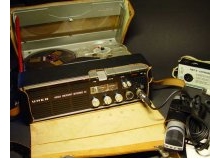 The original idea was to record the music played in the Kabuli teahouses, so I spoke to some of the teahouse musicians, trying to set up recording sessions. They were warm to the idea, and amazingly professional: "You don't want to do that here, my friend. You get too much background noise. All these guys chattering, cracking sunflower seeds, hawking and spitting - why don't you come over to the studio?" I feared they were having me on, but the next morning rode over in one of Kabul's two dozen taxis, and found some twenty musicians willing to work with me. I am forever grateful for their joyful cooperation. It has allowed to save for posterity a music that was little heard at the time, and rarely recorded.
Recordings were made in the winter of 1968/69 in Kabul, Afghanistan, with members of the Radio Afghanistan Orchestra, in their freezing studio on the outskirts of town. The recording equipment consisted of a Uher 4200 Reporter Stereo portable open reel recorder, the field reporter's workhorse of the sixties and much of the seventies, with two AKG cardioid music microphones (not the Uher speech mike in the picture) - and no mixing board. Few archivists of ethnic music in the field carried mixing equipment, or even a second microphone, keen as they were to keep the total gear portable. The strap of the Uher 4200 recorder, weighing 3.8 kg even without its brick-size power unit, could cut deep into the shoulder. With such technical limitations it was quite a challenge to achieve a proper sound balance when recording with a band of instruments of greatly varying acoustic impact, such as bowed strings, wind instruments and drums. Most of the work with the Afghani musicians, about 50 hours in all spread over several weeks, went into arranging and rearranging their seating relative to the two microphones, making a test recording, listening, asking a few people to move, et cetera. The artists were immensely patient. Some, notably Ustad Muhammad Omar and Moussa Kassimi, would take an active part and come up with alternative seating arrangements to create a better overall balance. Hearing them now reminds me of a line in a song sung by Hamida Rokhshana, then a young singer, by now one of the great masters of Afghani traditional music: "Let me be near you, oh my love, or die near you of a tormented heart.'
|
|
| Peter ten Hoopen | R E C O R D A L B U M S ethnic music | |
|
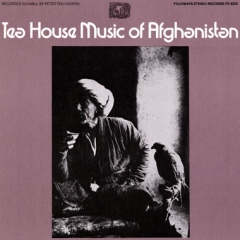
The Teahouse Music of Afghanistan Folkways Ethnic Records FE 4255, 1977. Recordings made in Kabul, winter 1968/1969, with members of the Radio Afghanistan Orchestra. Recordings and sleevenotes by Peter ten Hoopen. Published by the legendary Moses Asch's Folkways, after his death reissued on LP and CD (FE 4361) by the Smithsonian Institution. The site offers brief samples of the recorded piece. At the site You can also download liner notes. |
|
|
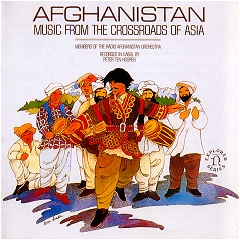
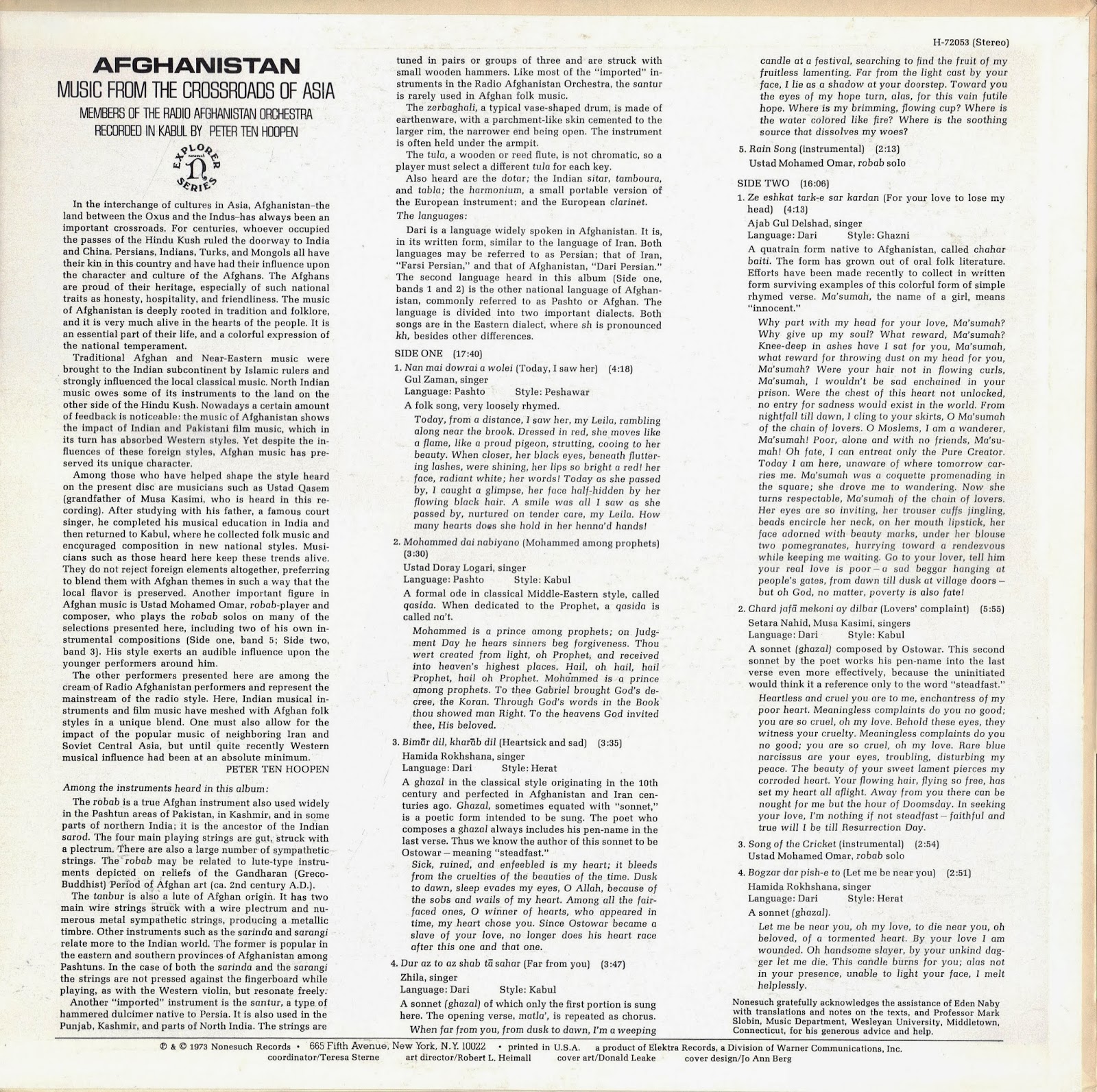
Afghanistan, Music from the Crossroads Elektra Nonesuch H-72053, 1973 Recordings made in Kabul, winter 1968/1969, with members of the Radio Afghanistan Orchestra. Published in Elektra's now historical Nonesuch Series (according to Dirty Linen 'a fabled achievement in the history of world music'), directed by Teresa Sterne. Recordings by Peter ten Hoopen. Liner notes by Peter ten Hoopen and Prof. Mark Slobin, Wesleyan University. Placed third in the Five Stars section of Rolling Stones Record Guide 1983. |
|
| Peter ten Hoopen | A P E R S O N A L F A V O U R I T E | |
|
Logari style
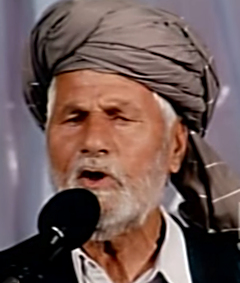
One of the Afghani music styles I like best is Logari, archetypical for the kind of music one would hear in the Kabuli teahouses in the late 1960s. Below is an example similar to a track by Aziz Gaznavi that I recorded myself, published on the Folkways album. It makes me deeply nostalgic. The singer, Momin Khan Beltoon came from Kabul Province, and was born in Chakari village of Khaki Jabbar District. However, he spent most of his life in Logar Province. His style of music reflects also the Kharabat style of Kabul. Beltoon's father died before he was born, his mother when he was very young. He was raised by his sister in Logar Province of Afghanistan. Beltoon learned to play the rubab and tanbur at a young age. He started singing at the age of 15, and sang in both Dari (Persian) and Pashtu. Wish I had caught him on vinyl as well. Here is a taste of his music, hope you like it as much as I do: Afghanistan - Logari style - Momim Khan Beltoon |
|
| Peter ten Hoopen | S I T A R F O R S A L E Vintage Rikki Ram | |
|
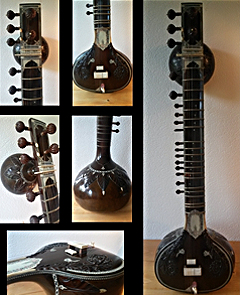
Built to Maihar specs, concert ready, €3000
As I am not playing sitar anymore and have not done for many years (as my guru used to explain: ones requires three hours of practice a day just to not lose existing skills) I have decided to sell my sitars. This beautiful, custom built in 1969 Rikki Ram has been widely admired for its clarity and deep sound - not quite like a Surbahar, but close. SOLD |
|
| Peter ten Hoopen | S I T A R F O R S A L E Vintage Hiren Roy | |
|
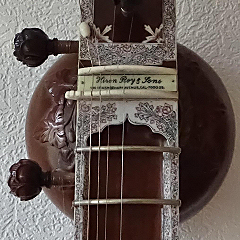
Commissioned via Nikhil Banerjee, concert ready, €3250
Vintage Hiren Roy, customs built in 1969, again after Maihar specs and after introduction by 'guru bhai' Nikhil Banerjee. (The quote marks are marks of irony: it seems absurd to call oneself a 'guru brother' of someone some much more advanced, but it is Indian custom: to have been at the feet of the same guru creates a bond for life. A sitar with a rock solid feel and great clarity. One sitaria who played a large number of different sitars remarked that it was the best sounding Hiren Roy he ever had in his hands. It comes with a custom made travel case reinforced with strips of spring steel, and has traveled by air quite confidently. See its page on the website of Toss Levy: Vintage Hiren Roy. SOLD |
|
Email: to protect my mailbox against harvesters and spammers, the email address is scrambled, and reassembled only in your email form. Please click on the animated typewriter to open your email client. |